The reason? Increasingly congested roads and the frustrating complexity of modern insurance claims. A small camera mounted on your dashboard can turn a messy "he said, she said" dispute into a settled case with clear video evidence. This piece traces the technological journey of dash cams, their growing impact on legal and insurance matters, and what's coming next for in-car camera systems, including how affordable vehicle maintenance fits into the picture.
From Simple Recorders to AI-Powered Guardians
The leap in dash cam technology over the past decade has been remarkable. Early devices were bulky, recorded in grainy, low-resolution images, and offered little more than basic loop recording. They captured events, sure, but crucial details were often lost in a blur of pixels, especially when the lighting was poor.
Modern dash cams are a different story entirely. High-quality aftermarket dash cams now pack serious tech into compact, user-friendly designs. Here's what you'll typically find in a decent unit today:
- Crystal-clear resolution: From Full HD to 4K, modern cameras capture details like number plates and road signs with clarity that leaves no room for doubt.
- Advanced night vision: Specialized sensors (like Sony's STARVIS) produce sharp footage in low-light conditions. That's a big deal for year-round driving in the UK.
- Wide-angle lenses: Capturing multiple lanes of traffic is standard now, giving you complete context for any incident and showing what surrounding vehicles were doing.
- Parking mode: G-sensor technology detects impacts or motion while you're parked, automatically triggering the camera. Your car's protected even when you're not there.
- GPS and telematics: Many units log location, speed, and time data, embedding a verifiable record directly into the video file.
The latest frontier? Artificial Intelligence integration. AI shifts the dash cam's role from passive recorder to active co-pilot. As seen with Trakm8's new AI dashcam, these systems can now actively help prevent accidents. They monitor driver fatigue, alert you to phone use, and provide Advanced Driver-Assistance Systems (ADAS) such as forward-collision warnings, all in real time.
Dash Cams in Accidents and Insurance Claims
The most significant benefit of a dash cam shows up in the stressful aftermath of an accident. High-definition footage provides an objective account of what happened, which is invaluable when sorting out fault in complex multi-vehicle collisions. It can protect an innocent driver from being unfairly blamed and facing higher premiums.
Dash cams are also a powerful weapon against automotive fraud. According to Momentum Insure, video evidence is increasingly effective at combating "crash-for-cash" schemes, where criminals intentionally cause accidents to file bogus insurance claims. Clear footage helps insurers process legitimate claims faster while weeding out the fraudulent ones.
When There's No Police Report
Sometimes, police simply can't attend every accident scene. Minor shunts and periods of extreme weather causing widespread disruption: these situations mean a driver's own evidence becomes critical. Dash cam footage can serve as the primary proof you need to support an insurance claim or legal action, documenting the event when no official report exists.
This matters even more for vulnerable road users. Building a case after a motorcycle crash without official police presence, for instance, can be incredibly difficult. Personal video evidence often becomes the cornerstone of any subsequent claim. Sound familiar? If you ride, a helmet-mounted or bike-mounted camera is worth serious consideration.
Beyond the Windscreen: Integrated Systems and Salvaged Parts
The future of in-car cameras is increasingly integrated. Manufacturers like Tesla, BMW, and Mercedes-Benz now offer built-in dash cams and 360-degree camera systems as standard or optional features. These sit within a larger ecosystem of sensors and AI (including V2X technology that lets vehicles communicate with each other), all designed to make roads safer.
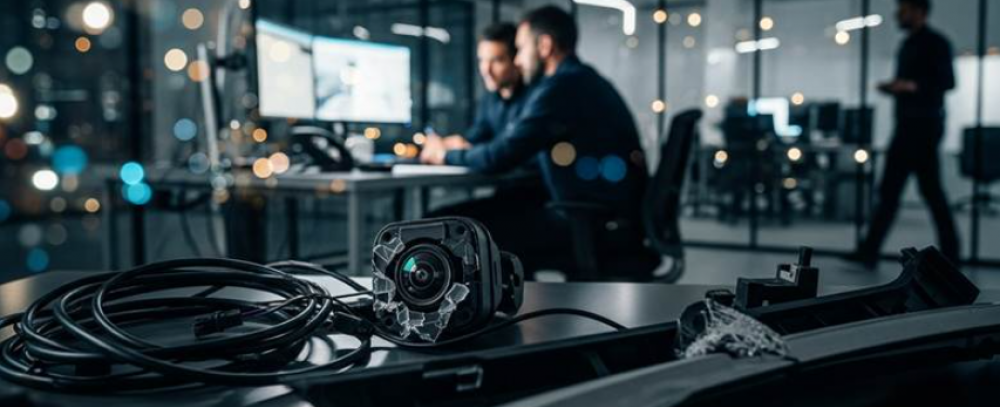
But as this tech becomes standard, a new problem emerges: repair costs. A damaged factory-fitted camera or sensor can be shockingly expensive to replace through a main dealer. That's created a strong, growing market for salvaged electronic components from reputable UK breakers.
Take a proactive step for your wallet and the environment: choose tested, quality used parts from a trusted provider like Breakeryard.com. Not only will you save money, but you'll also help reduce waste by giving components a new life.
So how do your options compare? Here's a quick breakdown:
Feature
Aftermarket Dash Cams
Factory-Integrated Systems
Installation
DIY or professional; can move between vehicles
Built into the vehicle's design and infotainment
Cost
Lower upfront, wide range of prices
Higher initial cost, often bundled with pricey trim packages
Upgradability
Easy to swap for the latest model
Fixed by the manufacturer; not easily upgraded
Repair
Simple to replace the whole unit
Complex and expensive; used parts can cut costs significantly
Integration
Standalone device
Fully integrated with ADAS, display, and alerts
The Future of Road Safety Is in Sight
The dash cam has gone from a simple recording device to a sophisticated, AI-enhanced safety partner. These cameras act as silent guardians, ready to bring clarity to the chaotic moments after a collision and even help prevent one from happening in the first place.
With dash cams now a mainstay of UK roads, drivers are better equipped than ever to protect themselves in both routine journeys and critical moments. Embracing these innovations—and ensuring their long-term affordability—will not only safeguard individuals but also help build safer, more accountable roads for everyone.


