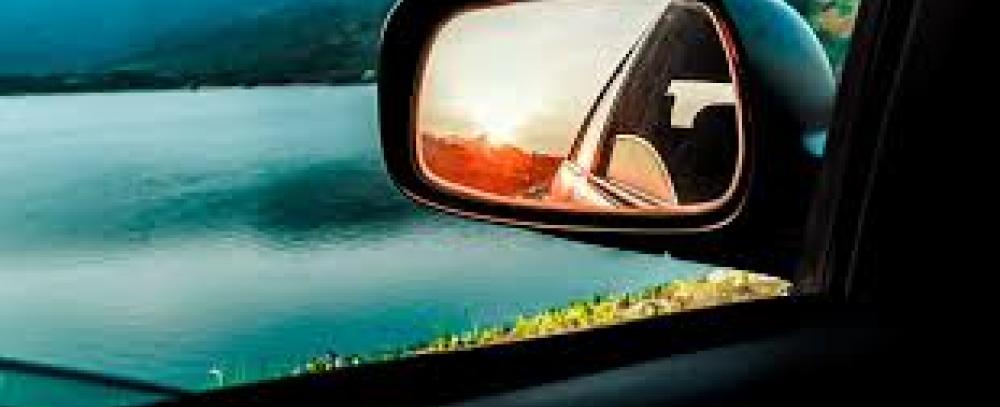
Wing mirrors—also known as side-view or door mirrors—are essential safety parts of vehicles designed to give drivers a view of the sides and rear, covering blind spots not visible in the rearview mirror. First introduced in the early 20th century, these mirrors have developed from simple reflective surfaces into advanced, high-tech parts that are legally needed for roadworthiness in many countries.
Here is a comprehensive guide to wing mirrors, their functions, maintenance, and the legalities surrounding them.
Key Features and Types
Modern wing mirrors offer a variety of features to improve comfort and safety:
Convex vs. Flat Glass: Driver-side mirrors are often flat for accurate distance judgment, while passenger-side mirrors are typically convex to provide a wider field of view. However, this can make objects appear farther away.
Aspheric Mirrors: Increasingly common, these combine a flat portion with a curved edge to minimise the blind spot.
Heated Mirrors: Terminals behind the glass heat up to remove fog, ice, or snow.
Power Folding: Allows drivers to fold mirrors in electronically, protecting them in tight parking spaces or automatic car washes.
Indicators & Puddle Lights: Many modern mirrors include integrated LED indicators for better visibility to other drivers, as well as downward-facing puddle lights that illuminate the ground, often called "puddle lamps" or "curb lights".
Auto-Dimming: Uses electrochromic technology to reduce glare from headlights behind you automatically.
Safety and Regulations (UK Focus)
Wing mirrors are critical for passing mandatory vehicle inspections like the UK's MOT or Ireland's NCT.
Legal Requirements: It is generally illegal to drive without a functioning driver-side mirror (offside). A broken, cracked, or missing wing mirror that hinders the view can result in fines, penalty points, or an MOT failure.
MOT Failure Reasons: Missing mirrors, cracked/broken glass, loose mountings, or inoperative, damaged indicators.
Replacement Advice: If a mirror is damaged, it is crucial to ensure the replacement matches the original functionality (e.g., if your car has electric/heated mirrors, the replacement must support these).
Maintenance and Repair
Because they protrude from the car, wing mirrors are highly vulnerable to damage, such as being clipped by passing vehicles or scraped in parking lots.
Modular Replacement: Often, you do not need to replace the entire unit. You can replace just the mirror glass (which usually "pops" out), the plastic cover (casing), or the indicator unit.
Stick-on Glass: A quick, inexpensive repair involves sticking new, cut-to-size glass directly over the old, cracked glass, though this may lose heated functionality.
Painting Covers: New wing mirror covers are often supplied in grey primer, requiring them to be painted to match the car's bodywork.
Proper Adjustment
Properly adjusted mirrors are essential to reduce blind spots.
Correct Setting: You should only see a small portion of your own car in the inner edge of the mirror. The horizon should be roughly in the middle of the mirror, providing a balanced view of the road.
Passenger Side: The mirror should be angled down to spot the curb for parking.
The Future of Wing Mirrors
The automotive industry is gradually moving toward replacing physical mirrors with cameras, often referred to as Camera Monitor Systems (CMS).
Benefits: Cameras improve aerodynamics (reducing drag by 2-7%), reduce wind noise, and can provide a digital, zero-blind-spot image on a screen inside the car.
Disadvantages: Current digital systems may face issues with depth perception and, amusingly, they are less effective at anchoring spider webs, leading to a decline in the "spider housing" provided by traditional, dirty mirror casings.
Here are 10 Interesting Points About Car Wing Mirrors
16 Nov 2023 —Request A Part * Full range of replacement Wing Mirror Units, ranging from Alfa Romeo to Volvo. All our complete units are exactly...


