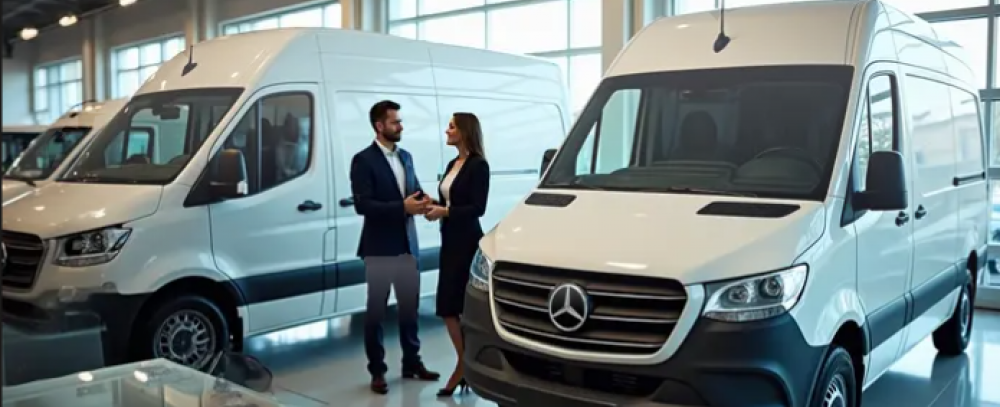
For any business that relies on vans, the question of how to acquire them is one of the most significant financial decisions you'll face. The breakers' yards have long been the go-to solution for cost-conscious operators looking to save up to 80% on parts , but there's an alternative that's changing the calculus entirely. When you're deciding whether to keep an older van running or move to something newer, van lease options from providers like Swiss Vans are increasingly making ownership look like the more expensive road.
The decision between leasing and buying a van shapes your cash flow, maintenance costs, operational flexibility, and ultimately, your business's bottom line. Here's how to decide which path is right for you.
What Does It Mean to Lease a Van?
Van leasing is effectively a long-term rental agreement. Instead of purchasing a vehicle outright or financing it through a loan, you pay a monthly fee to use a van for a fixed period—typically two to four years. At the end of the agreement, you simply return the van with no further obligations.
This arrangement is often called Contract Hire in the business world, and it's the most popular route for VAT-registered companies and sole traders who want predictable costs without the headache of ownership. With Swiss Vans, for instance, you choose your van, term, annual mileage, and initial payment, then sign and have it delivered to your door—often within days.
When Van Leasing Makes Financial Sense
1. Lower Upfront Costs Preserve Cash Flow
Leasing typically requires a much smaller initial outlay than purchasing a van outright. Instead of paying the full vehicle price, you're paying a deposit—often around £1,000 with many providers—followed by fixed monthly payments. This frees up working capital for other business priorities, whether that's stocking inventory, hiring staff, or marketing your services.
For sole traders and small businesses operating on tight margins, keeping cash in the business while still accessing reliable transport is often more valuable than owning an asset that depreciates the moment you drive it off the forecourt.
2. Predictable Monthly Expenses
Fixed monthly payments mean easier budgeting. You know exactly what your van costs each month, with no unexpected repair bills to throw off your forecasts. Many lease agreements can include maintenance packages, further smoothing out costs and removing the gamble of expensive breakdowns.
3. No Depreciation Worries
One of the hidden costs of vehicle ownership is depreciation. The value of a new van drops significantly in its first few years, and when you own it, that loss is yours to absorb. With leasing, you simply return the van at the end of the term and walk away, regardless of its market value. This takes the risk out of fluctuating used van prices and saves you the hassle of selling the vehicle later.
4. Access to Newer, More Reliable Models
Leasing enables you to drive a brand-new van every few years, always with the latest safety features, fuel efficiency, and technology. This can translate into lower running costs, better fuel economy, and fewer breakdowns—all crucial for businesses where downtime means lost revenue.
When Keeping an Older Van Still Makes Sense
Leasing isn't always the right answer. There are scenarios where buying or keeping an older van on the road with second-hand parts remains the smarter choice.
High Mileage Operations
Most lease agreements come with annual mileage limits, typically between 8,000 and 15,000 miles, with excess charges for going over. If your business involves long-haul deliveries or high daily mileage, buying or financing a van—which typically has no mileage caps—might be more cost-effective.
Customisation Is Critical
If your work requires substantial modifications—bespoke racking, refrigeration units, livery, or specialist upfitting—ownership is usually the better path. Leasing can restrict modifications, as the vehicle must be returned in good condition at the end of the term.
Long-Term Ownership Plans
If you intend to keep a van for five years or more, financing through hire purchase (HP) may work out cheaper overall. With HP, you pay higher monthly amounts but own the vehicle outright at the end, with no ongoing rental costs and the ability to sell it for residual value.
The Breakeryard Connection: When Leasing and Used Parts Meet
Even for businesses that choose to lease, Breakeryard's network of approved dismantlers remains invaluable. Lease agreements typically require you to return the van in good condition with fair wear and tear. If a leased van suffers damage or a component failure outside the maintenance package, sourcing a tested OEM used part through Breakeryard can be significantly cheaper than paying dealer prices. With up to 80% savings available, a used replacement part might be the difference between staying within your lease terms and facing costly end-of-contract penalties.
Making the Right Decision for Your Business
So how do you choose? Here's a quick checklist:
Consider leasing if:
- You want lower upfront costs and fixed monthly payments
- You prefer driving newer, more reliable models
- Your mileage is predictable and within annual limits
- You want to avoid depreciation and the hassle of selling
- You don't need extensive customisation
Consider buying (or keeping an older van) if:
- Your mileage is high and unpredictable
- You need significant custom modifications
- You plan to keep the van for over five years
- You want to build equity and eventually own the asset
Consider using Breakeryard for second-hand parts if:
- You're keeping an older van on the road
- You need to repair a leased van outside its maintenance package
- You want to save up to 80% versus main dealer prices
Final Verdict
For many UK businesses, a van lease offers a compelling alternative to the traditional approach of buying and maintaining ageing vehicles. The lower upfront costs, predictable expenses, and freedom from depreciation make it an increasingly popular choice—and the reason why specialists like Swiss Vans have become go-to partners for businesses upgrading their fleets. However, it's not a one-size-fits-all solution. High-mileage operators, businesses requiring heavy customisation, or those with long-term ownership strategies will likely find that ownership remains the better path.
The smartest approach? Consider your specific operational needs, run the numbers on cash flow and total cost of ownership, and remember that even if you lease, trustworthy partners like Breakeryard can still help you manage maintenance costs affordably. The choice between leasing and ownership is ultimately about aligning your vehicle strategy with your business goals—and today, there are more tools than ever to get it right.


